
What we learned deploying AI on 300+ tax resolution cases
Why most AI can't do a 433, what it takes, and how to tell the difference.
For enrolled agents and the people who run resolution practices. A 20-minute read. Nothing in it requires buying anything.
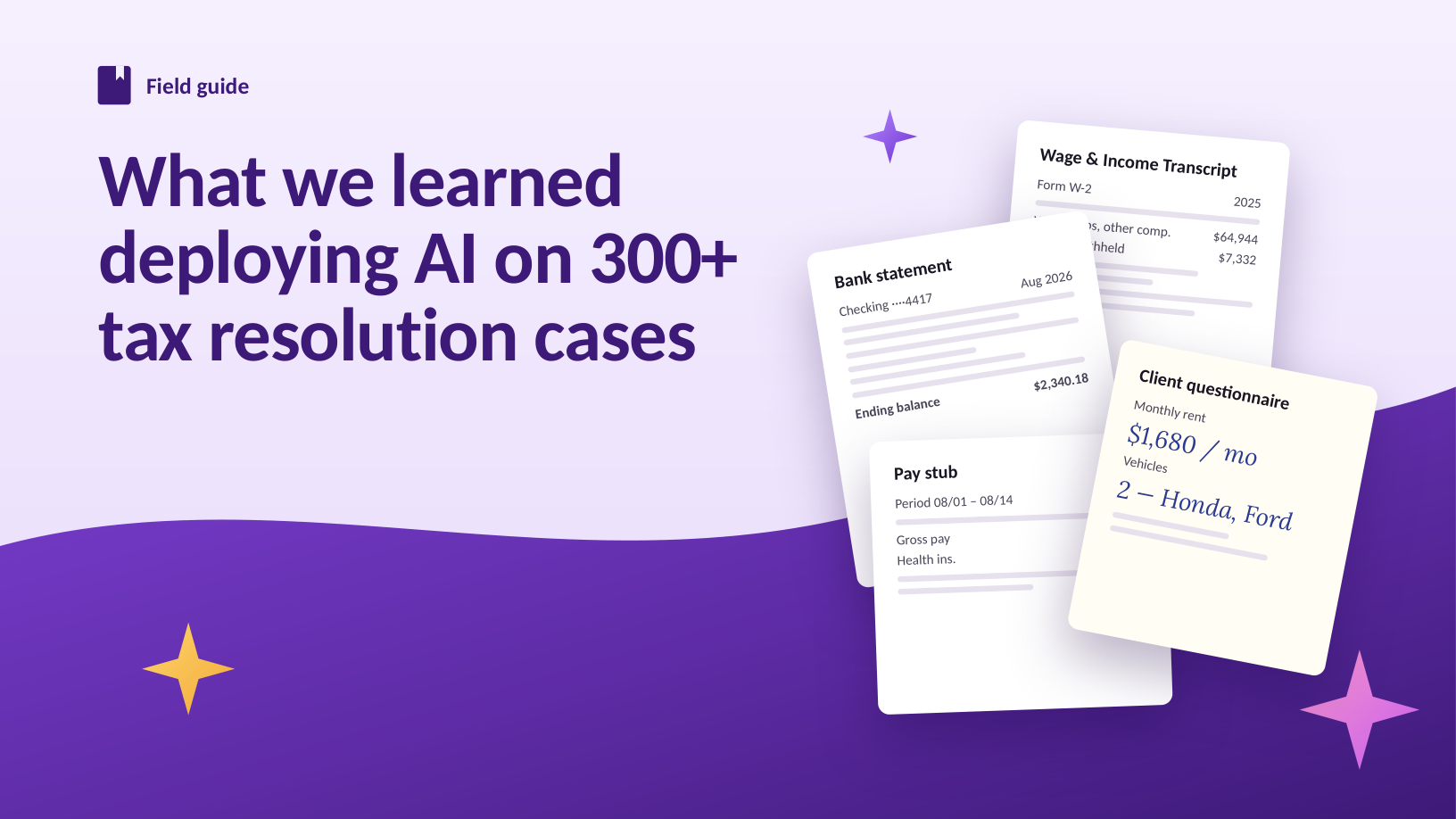
Six mistakes the draft walks through.
These are six actual mistakes from reviewed cases, not six generic checks. The guide pairs each one with the situation, rule, and prohibition that addressed it.
The right number, wrong field
A residence timeline was used for employment tenure on a 433-A (OIC). The value existed, but belonged to a different question.
The right rule, wrong form
Expense logic calibrated for a 433-F was carried into an OIC, where the relevant Section 7 instructions differed.
The wrong source recency
A pay stub and Wage and Income transcript both showed wages. The draft needed a rule for which more-current source to use.
A gap filled from the nearest number
With no bank statement provided, a questionnaire balance was used without the form-specific treatment and flag the case required.
The firm’s conventions were missing
Vehicle, transportation, and Social Security entries exposed practice choices that had not been written into the workflow.
A dropped decimal point
A handwritten expense was misread into an implausible amount. A plausibility check should have stopped it for review.
The fix was not a better prompt.
Situation. Rule. Prohibition. The guide shows how practitioners turned implicit decisions into instructions that can be reviewed. A rule has to say when it applies, what to do, and what must never happen silently.
That is the difference between reading a number off a document and preparing a draft a practitioner can question.
Monthly gross wages, with both a Wage and Income transcript and a pay stub available.
Compute from each source independently, use the more recent one, and identify which source was used.
Do not add the two figures together or silently use the pay stub’s year-to-date column.
Condensed from a case example in the draft. Firms should validate their own rules against the relevant form and client facts.
Seven questions to ask any AI vendor.
The six mistakes are case examples. These seven are due-diligence questions for a vendor or a tool your team built itself. They are not a second list of findings.
Why Rima for tax resolution?
Rima prepared 300+ cases alongside enrolled agents across Forms 433-F, 433-B, and 433-A (OIC). The six mistakes in this guide show why extracting a figure is not enough: form-specific rules, source traceability, and a stop for practitioner review matter when messy evidence becomes a draft. The enrolled agent remains responsible for the final decision.
Nothing goes out unread.
Get the full guide by email. Read how six case mistakes became explicit rules, then use the seven questions to examine any AI workflow, including your own.